Artist Statement
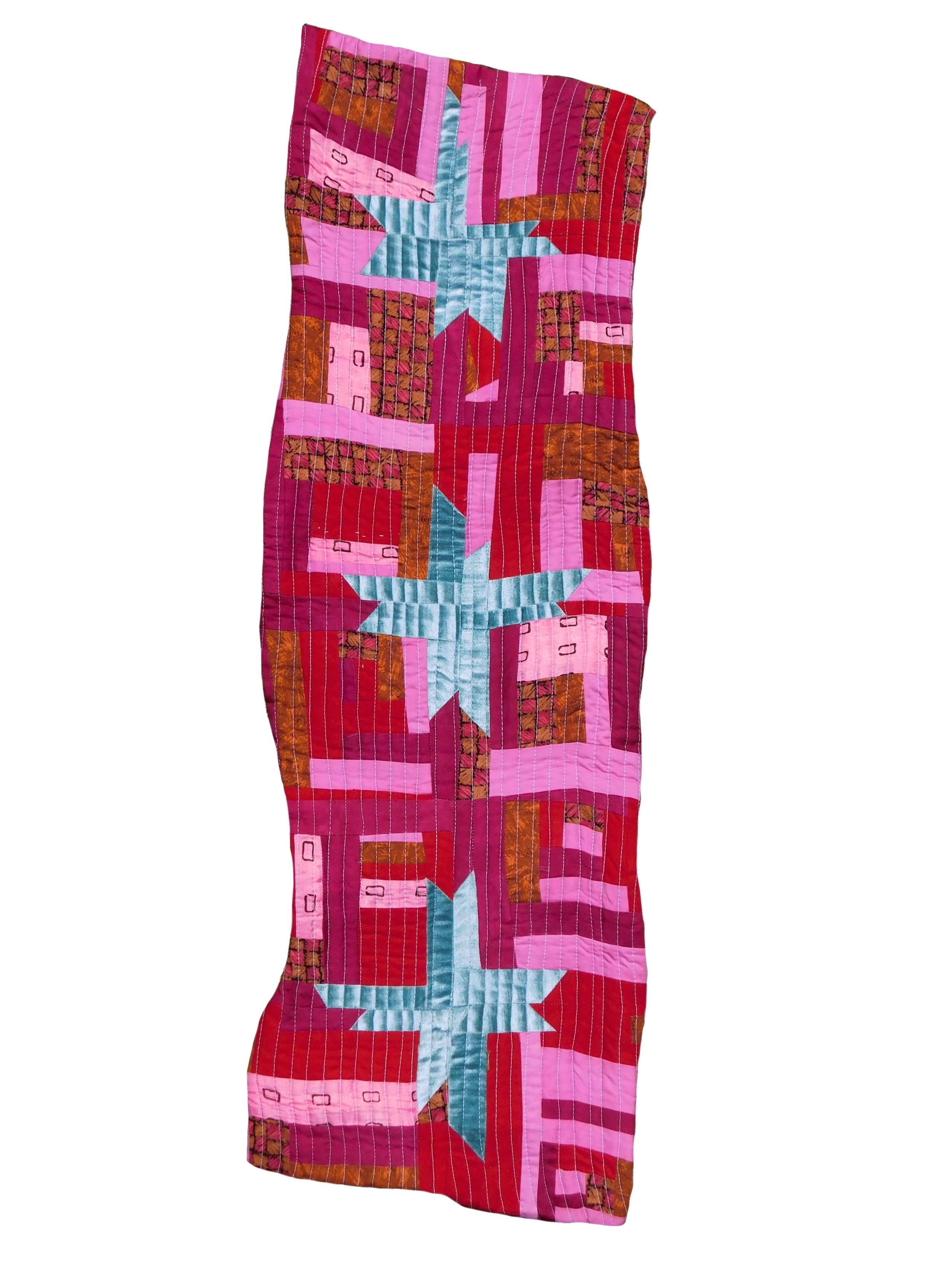
The quilts and garments I create begin as abstract motifs - drawn from historical quilt designs, patterns, and observations from my own life. Throughout my process, I transform discarded clothing and fabrics, simultaneously giving new life to these abandoned materials and imbuing the work with familiarity. My art is a personal reflection on these everyday objects, and a preservation of fiber processes.
To keep the balance between historical research and intuitive making, I'm continuously responding to the work during its construction, and making space for these textiles, which have their own history, to speak for themselves. In a fast-paced world like ours, it isn't often that we can work so meticulously and closely observe the mundane. The act of sewing and hand dyeing is also being preserved in this process, skills that once dominated our lives are similarly dissipating, just like some of these textiles.
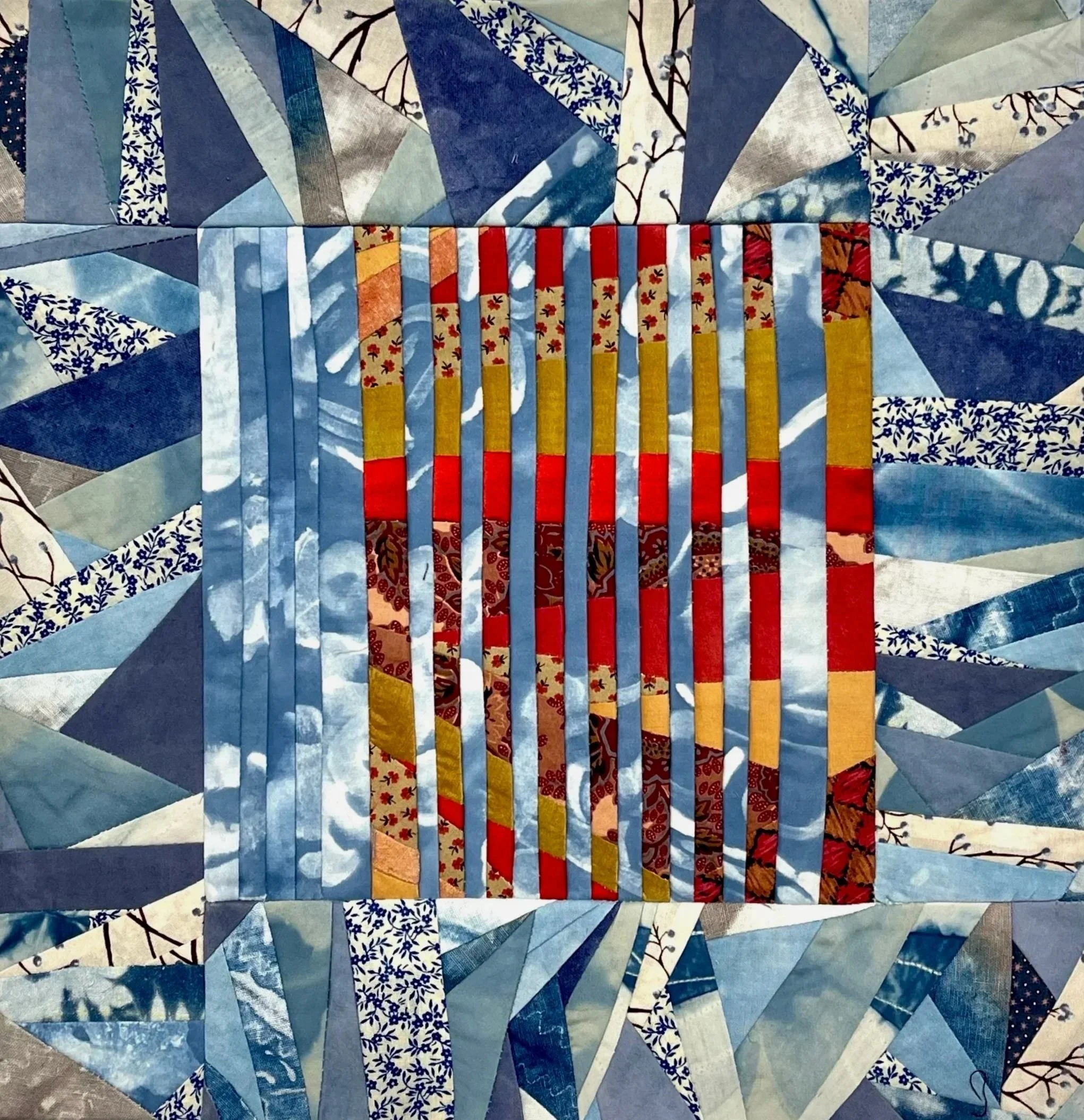
Not only reviving these textile remains’, but re-imaging them into something new by surface manipulation, cyanotypes, direct surface painting techniques, and dyes. Many of those natural dyes are foraged from my home, but my most notable dye is indigo. The blues of indigo have a transcendent, peaceful quality that I find myself naturally drawn to in all of my work, but my relationship to this pigment goes deeper than the color it produces. As a woman with Indo-Caribbean heritage, this plant that is native to India helps me to connect with a lineage that often feels unfamiliar to me, but also has history here in the South, my home, as a crop fueled from slave labor. Inside my indigo vat, both the history of oppression and my maternal heritage exist, and its ambiguity lives in all of my work. My historical research of materials informs my practice as I attempt to track the provenance of all my materials and riddle the abstract of designs with personal sentimentality.
By continuing to educate myself and improve my own skills with these historical processes I’m also learning about myself. Every piece informs and leaves me with more questions, creating this cycle that is motivated by the process of making. Clothing, quilts, and textiles are connected to us through touch and are some of the most intimate objects in our lives. By using some of the most familiar materials I create an easy space for people to open up about their own experiences. Every piece is considered a self portrait, but by showing my own vulnerability, I invite others’ curiosity of the mundane and entice exploration of the unknown.
Biography
Katie Nisha Boyd is a fiber-based artist who explores her ethnic and national identity through costuming and traditional crafts such as quilting. She combines this personal work with historical textile research as a way to pay homage to art forms that, despite their close proximity to our lives, are rarely highlighted.
To materialize these intricate feelings, she utilizes personal and found fabrics bringing new life and purpose to discarded materials. Her quilted tapestries and garments include many different textile processes such as cyanotypes, shibori, hand sewing, and hand dyeing. Notably, indigo dye is featured heavily in her work, a process with deep roots in both South Carolina, her home, and India, part of her ethnic heritage. Katelyn examines the intricacies of her Southern and Indo-Caribbean ancestry, using it as a platform to discuss the makings of a complex identity. Between her two practices, quilting and garments, she memorializes herself, her family, and other women makers, while sparking imagination in her audience.
Katie has interned at the Nelson Atkins within their Asian Exhibition department which expanded her love of history and exhibition design. As an intern at Trapp and Co. working in their floral, interior design, and women's fashion department, she has developed expertise in installation and small business marketing. Boyd completed her BFA in Fiber at the Kansas City Art Institute with a minor in Asian Studies. She has shown her work at the Kansas City Artist Coalition Gallery, the Spartanburg SC Garden Arts Festival, the Albrecht-Kemper Museum of Art, and the Leedy-Voulkos Art Center in KC.